Pasta for the Bees— Fabriano Friends · Giorgio Poeta Miele
Just outside the main streets of Fabriano, past the historic center and the old paper mills, the hills open up, and the beehives take over. They all belong to Giorgio Poeta. Giorgio started with two hives his father gave him 23 years ago. He's the first beekeeper in his family, and he still talks about the bees like they taught him everything.
"They are nature's perfect timepiece," he told us. "Living alongside them, you realize there is a powerful link between all of nature's systems."
Giorgio kindly opened the visit with coffee and pastries from Pozzo, a bakery in Senigallia, and it was the kind of spread that makes us slow down before we'd even started. A chocolate coffee croissant, embellished with an intricate lattice on top, and flaky in a way that shattered a little with every bite. We stood inside their manufacturing area with our espresso, and it felt like the right way to ease into a morning about bees.
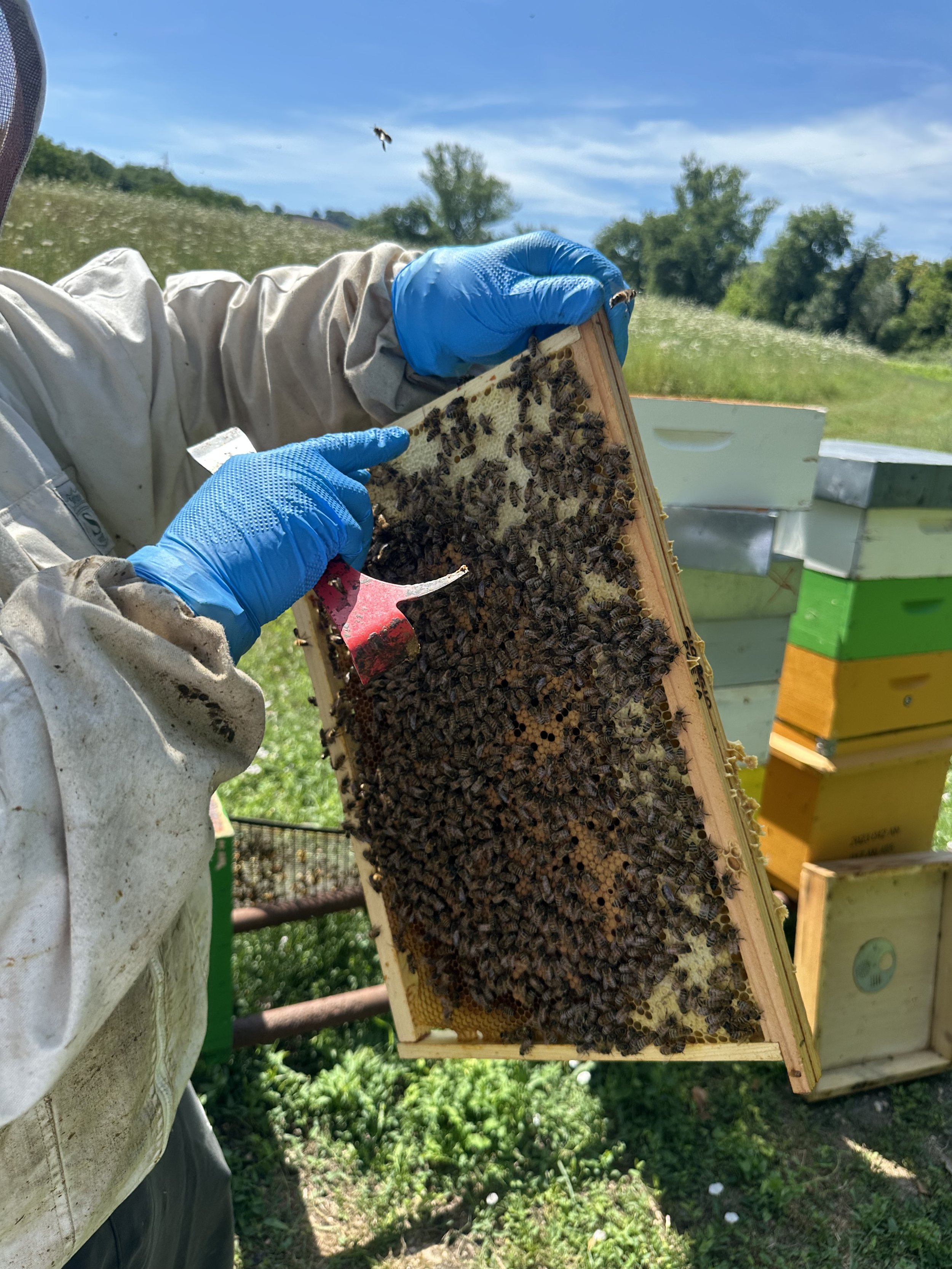
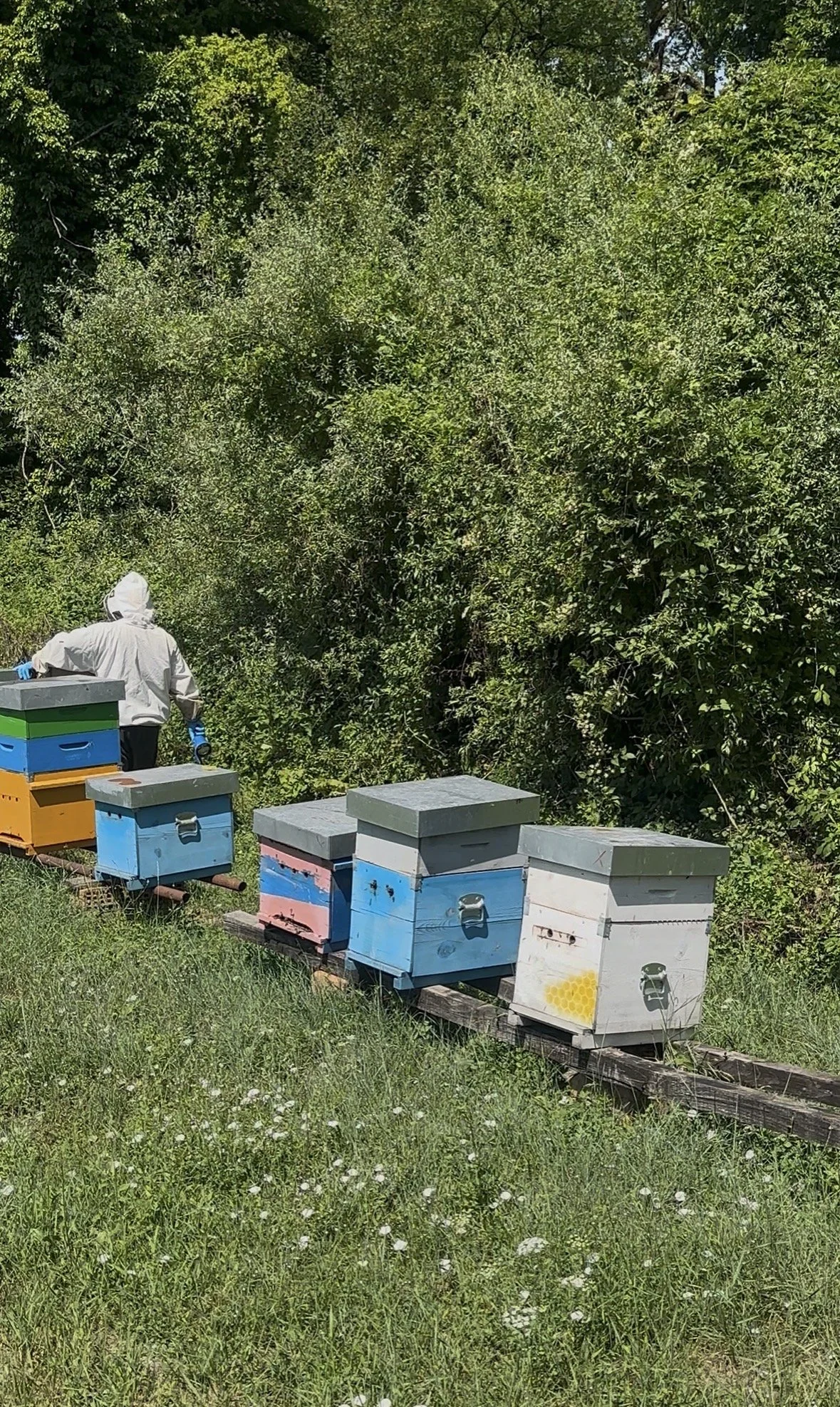
We watched the whole process from the hives to the production to tasting. Giorgio took us down to the hives in his van, showing us the flower fields in between. Once we arrived at the hives, we put on beekeeping suits to protect ourselves from the swarms (but they were friendly, I promise!). He showed us how the frames come out of the hive, heavy and gold, covered in bees humming faintly, which then travelled back up the hill to go straight into a centrifuge. No oxygen added, nothing extra, just honey the way the bees left it, thick and warm and smelling like whatever flower it came from. Each hive produces about 300- 320 kg per year, but they only take about 30 kg. Then he told us about the products the bees produce in each hive: royal jelly and wax, and then those that are harvested: honey, pollen, and propolis. As he simply described it to us, “The honey is like the pasta for the bees, and the pollen is like the meat.”
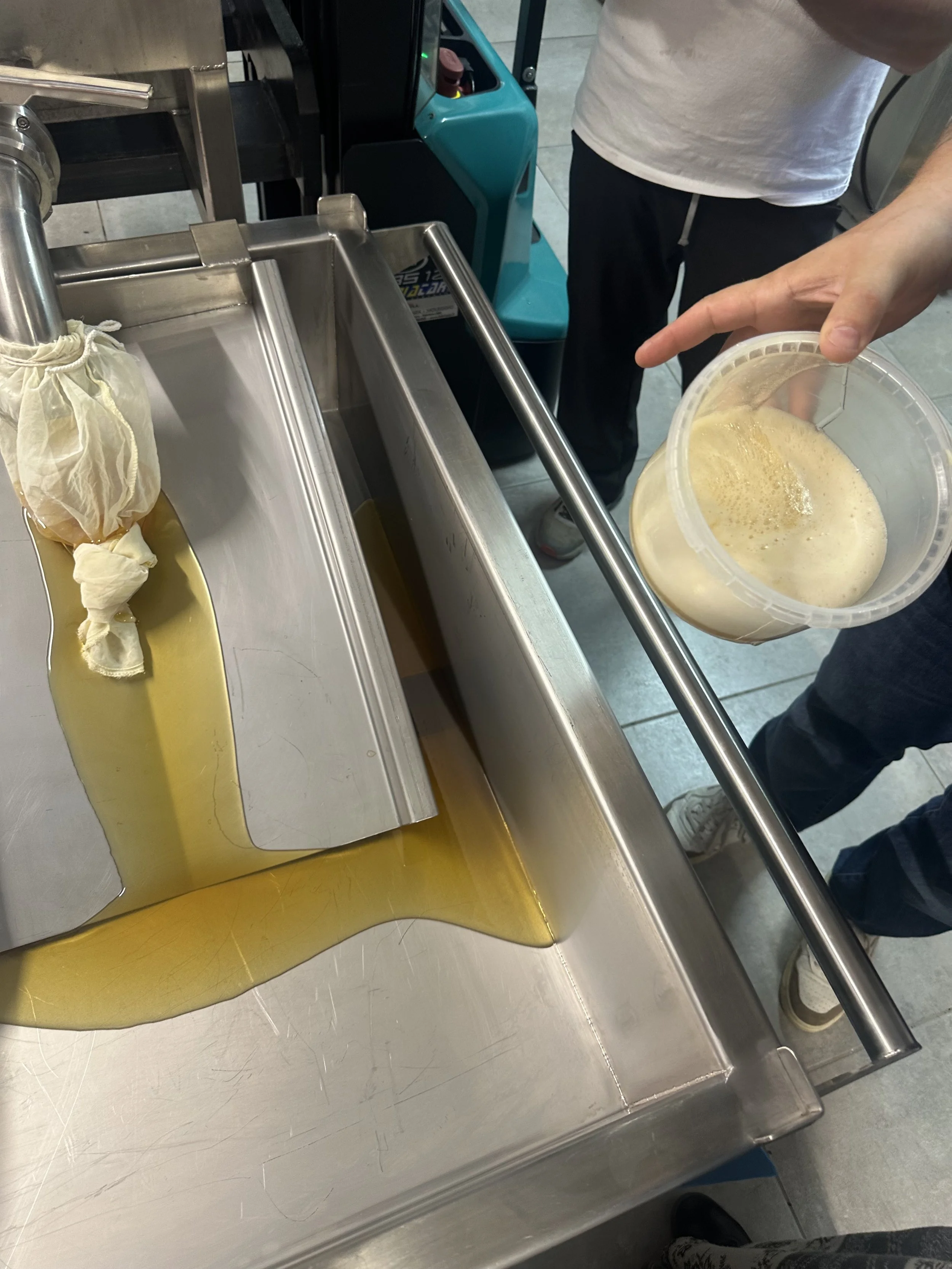
In their manufacturing area, they collect the honey in bulk, up to 300 kg per batch, kept at a steady 16 degrees, so it stays fresh. From there, it goes into a machine (that only they have) that holds 1.2 tons at once, with paddles slowly turning it while it sits at around 16% water and 84% sugar. Add it all up, and Giorgio's operation makes 20 to 30 tons of honey a year, roughly 200,000 jars, mostly in 28g and 250g sizes.
What was particularly interesting to me was how much variety there was, and how different each one tasted straight off the spoon. Giorgio makes 15 kinds of honey. Rapeseed and sunflower were some of the first his family produced, more mild and buttery, and now there's also ivy honey, which only comes some years, tastes almost herbal, and takes a lot of patience. There's also coriander honey from Marche and Abruzzo, sharp and a little spicy, cherry honey he's now producing in Verona, and up in Veneto, near Asiago, cherry and dandelion as well. Piemonte gives chestnut and hazelnut, deep and almost smoky, Basilicata gives orange blossom, light and floral. Each region shapes the flavor, and not every location produces honey. The ones that do usually yield just 30 to 40 kg each. I've done a fair number of honey tastings at this point, and this was, hands down, the smoothest and creamiest I've tasted, with no grain to it at all.
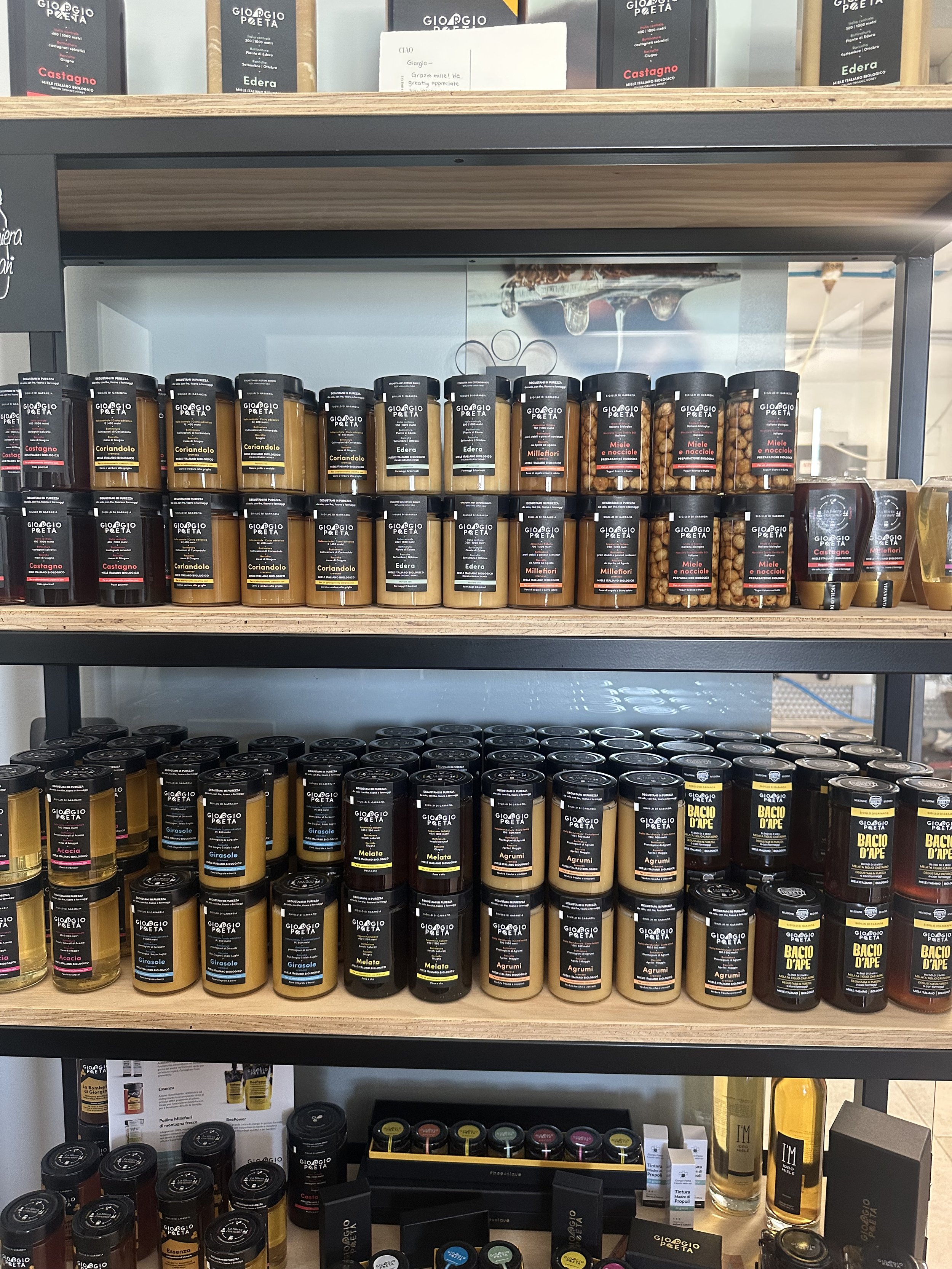
His proudest one might be Carato GranCru, an acacia honey aged in oak barriques, the only honey in the world made that way. You can find it, plus the rest of his products, at Eataly and Roscioli in New York.
Ask him what makes his honey different, and he won't spend his time talking about his machines or scale. He'll talk about time and attention, the same care the bees ask of him. Spring is his favorite time for that reason.
"There's a sense of fervor, strength, and connection," he said. "There's a desire to burst into life. And we support our bees, helping them express themselves in the best possible way."
His harvest peaks for volume in the springtime, but the best honey, quality-wise, comes in July and September.
He's honest about what's ahead too. When asked about the biggest challenges he sees for his company, he explained that Italians don't eat much honey, Fabriano included. He also explained that Italian law allows about 20 hives per person, which means some families end up keeping hives of their own instead of buying honey, changing the overall shape of the industry compared to other countries.
He also taught me about something most people wouldn't know: air quality. If the bees bring back polluted air or bad pollen, it hurts the whole hive.
We asked what he wished people understood about bees.
He said, "Behind everything, whether it's a product, an experience, or simply a person, there is always a story that needs to be listened to in silence and deeply understood."
If you're visiting Fabriano, look for the honeycomb frames too. Giorgio supplies them to hotels for breakfast (and if you’re lucky and request some from him in advance), and there's really nothing like it.
Eliza Roth (Intern at Fritto Misto Comune - UNISG)
